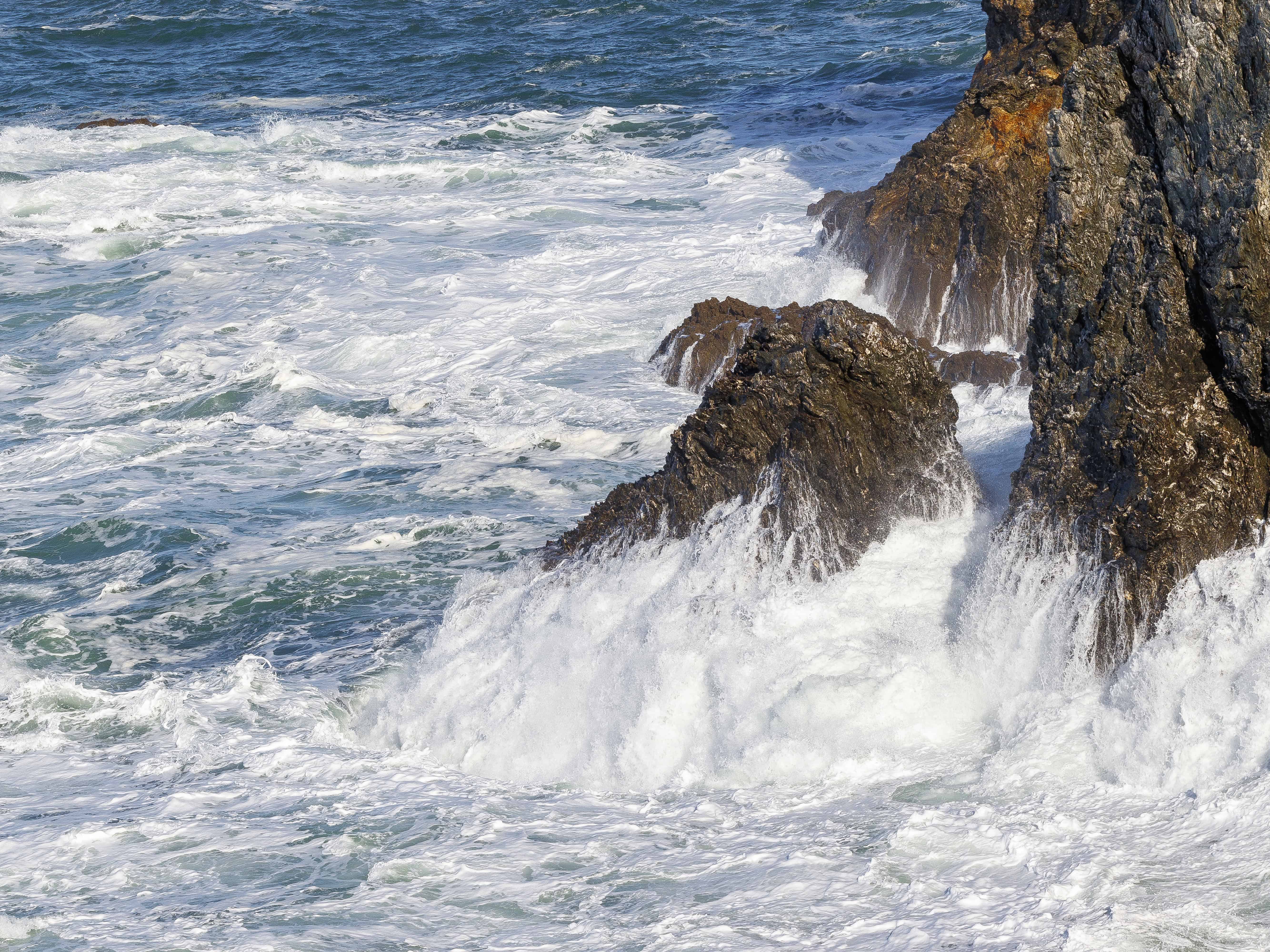
How to Photograph Coastal Landscapes in October
The month the sea starts speaking again — low light, high water, and no one left on the headland but you.
October is when the Atlantic remembers what it is. The flat, generous light of summer thins out. The first true swells arrive from somewhere far to the west, and the coast empties of everyone who came for the beach. What’s left is the version of the shore I’ve spent forty years photographing: raw, unhurried, and honest. If you only shoot the sea for one month of the year, make it this one.
This is a field guide, not a lecture. I’ll walk through the light, the water, the settings, and the specific Finistère locations that come alive in autumn — with the technical detail set aside in its own boxes so the story doesn’t stop for it. Take what’s useful and leave the rest on the rocks.
Why October for coastal landscape photography?
The sun sits lower now, and it stays low. Through summer the good light is a narrow window at each end of a very long day; in October the whole day tilts golden and grey. The sun rises late enough that you don’t have to abandon sleep entirely to catch dawn, and sets early enough that blue hour arrives while you can still feel your hands. That lower angle rakes across wet granite and pulls texture out of everything — the grain of the rock, the drag of the foam, the ribs of sand the last tide left behind.
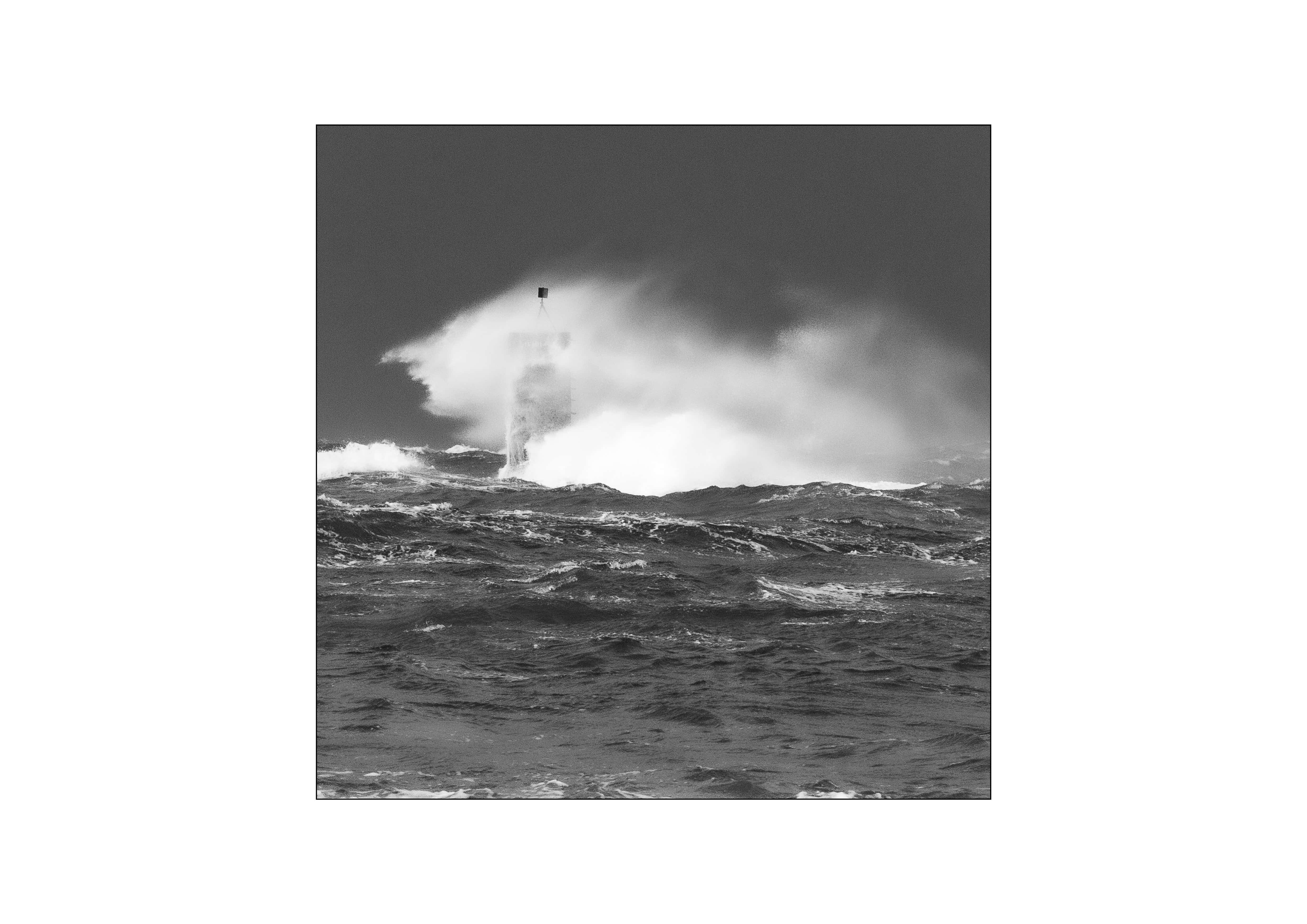
It’s also weather that moves. A single October morning can hand you fog, a break of hard sun, a squall, and then that scoured post-storm clarity where the air looks rinsed. Don’t wait for perfect conditions. The imperfect ones are the photograph. My whole Fury and the Grace series lives in exactly this instability — the moment the weather can’t decide.
Shoot the transition, not the peak
The strongest coastal frames come in the ten minutes on either side of a change: as fog lifts, as a squall clears, as the sun drops behind a bank of cloud and everything goes to pewter. Watch the horizon upwind — that’s where your next set of conditions is coming from — and be set up before it arrives, not scrambling when it does.
Overcast is not a wasted day. A flat white sky is a giant softbox and the perfect ground for high-key, minimalist water studies — the register my Atlantic Silences work lives in.
Working with autumn swell and tides
October brings bigger tides and bigger water, and both are your material. A rising equinoctial tide against a rocky point is pure drama; a long ebb leaves you reflective flats and isolated pools that mirror the sky. The trick is to know which one you’re walking into before you commit to a spot, because on this coast the difference between a shooting position and a swim is about ninety minutes.
Long exposure is the technique that turns all this movement into feeling. Smoothing a heaving sea into mist strips the literal chaos out and leaves the mood behind — the ephemeral, the quiet after the violence. It’s the single most transformative thing you can do with autumn water, and October’s low light makes it far easier to pull off than the glare of July.
Turning swell into silk
Start from a tripod — non-negotiable — and a remote release or 2-second timer. Meter for the scene, then add your neutral-density filter and let the exposure stretch. Aim for a shutter long enough to blur the water but short enough to keep some structure in it; fully-milk-smooth is a choice, not a default.
- Filter
- 6-stop ND for moving cloud & texture; 10-stop for glassy, minimalist water
- Shutter
- 1–4 s for energy in the wave; 15–60 s for full silk
- Aperture
- f/11 for edge-to-edge sharpness without diffraction softening
- ISO
- 100 — keep it at base and let time do the work
Wipe the front element between frames — October spray is relentless — and check the corners for creep on very long exposures.
A starting point for the shore
There’s no single correct exposure on the coast — only the one you decide to author. But if you’re arriving cold on an October morning and want a base to work from, start here and adjust to the light in front of you.
Expose to protect the highlights in the sky and the foam; you can always lift the granite in post, but blown white water can’t be recovered. If you work in black and white — and on this coast, in this month, I almost always do — think in tones as you shoot, not in colour. Ask where your brightest bright and deepest dark will sit before you press the shutter.
Four Finistère spots that come alive in October
These are places I return to when the season turns. None of them need a crowd, and all of them are better in bad weather.
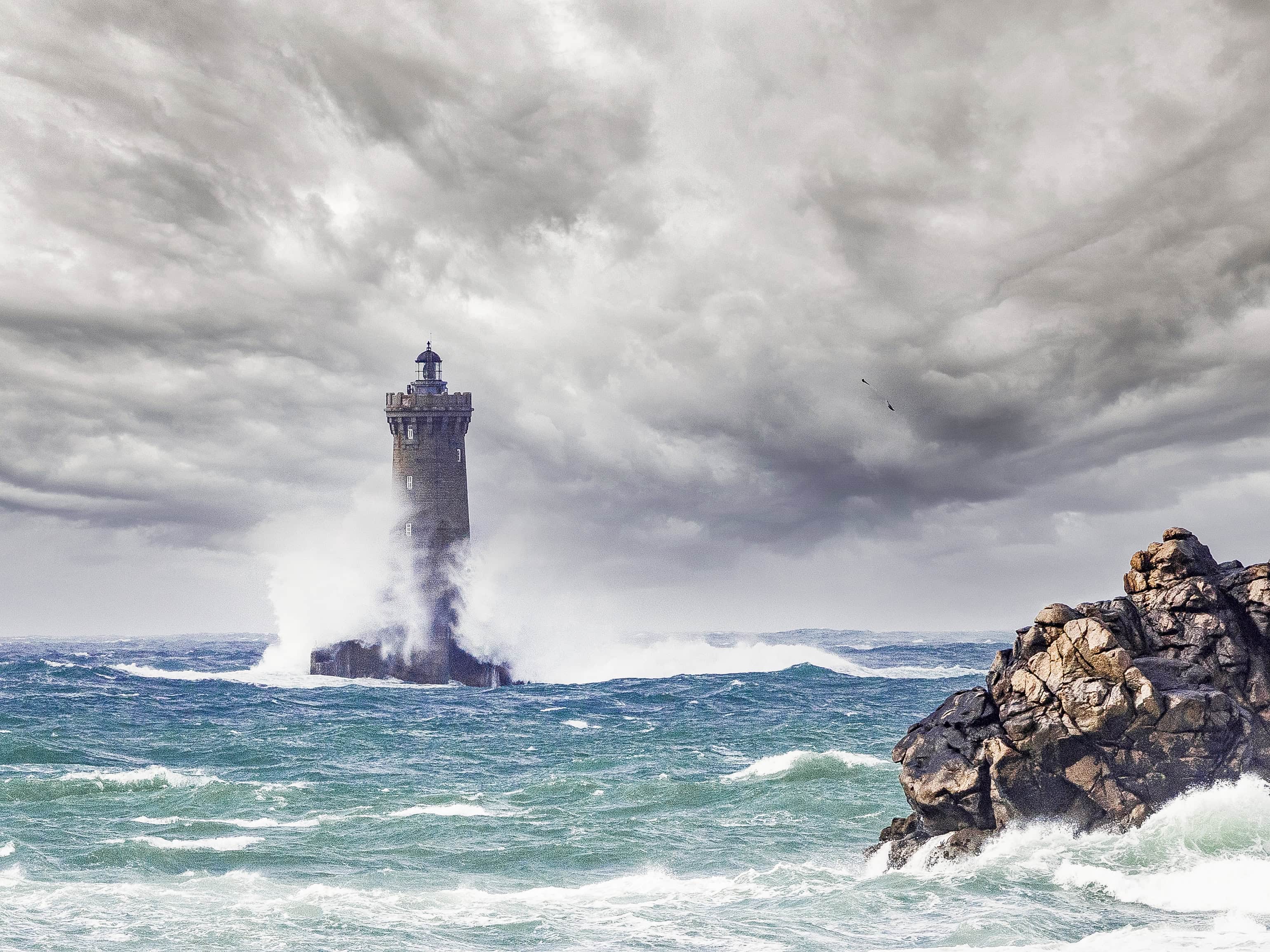
Phare du Four
The lighthouse offshore from Porspoder is at its most cinematic when an October swell wraps around its base. Shoot it from the shore at rising tide with a long lens compressed against a moody sky — the isolation is the whole image.
Pointe de Pen-Hir
The Tas de Pois stacks marching out to sea are made for autumn light and long exposure. Late afternoon, west-facing, with the sun sinking behind the swell — this is a full-drama location.
Baie des Trépassés
A wide, exposed beach that takes the full force of the Atlantic. On a big ebb it gives you reflective sand and a clean horizon; on a rising storm tide it gives you fury. Come for either.
Cap de la Chèvre
Heather-topped cliffs and layered headlands that fade into October haze — the natural home for minimalist, high-key work. Best in the soft grey light after a front passes through.
October coastal checklist
- Check the tide table and shoot the ninety minutes around the turn
- Sturdy tripod, ND filters (6- and 10-stop), remote release
- Lens cloths — more than you think you need — and a rocket blower
- Waterproof shell, grippy boots, gloves you can shoot in
- Spare batteries kept warm; cold October air drains them fast
- Tell someone where you’re going, and know your tide escape route
- Arrive early enough to be set up before the light turns
Safety isn’t a footnote on this coast in autumn. Rogue sets come further up than you expect, granite is lethal when it’s wet, and the light that makes the picture is also the light that makes it hard to see the water coming. Keep one eye on the sea at all times. No frame is worth a slip.
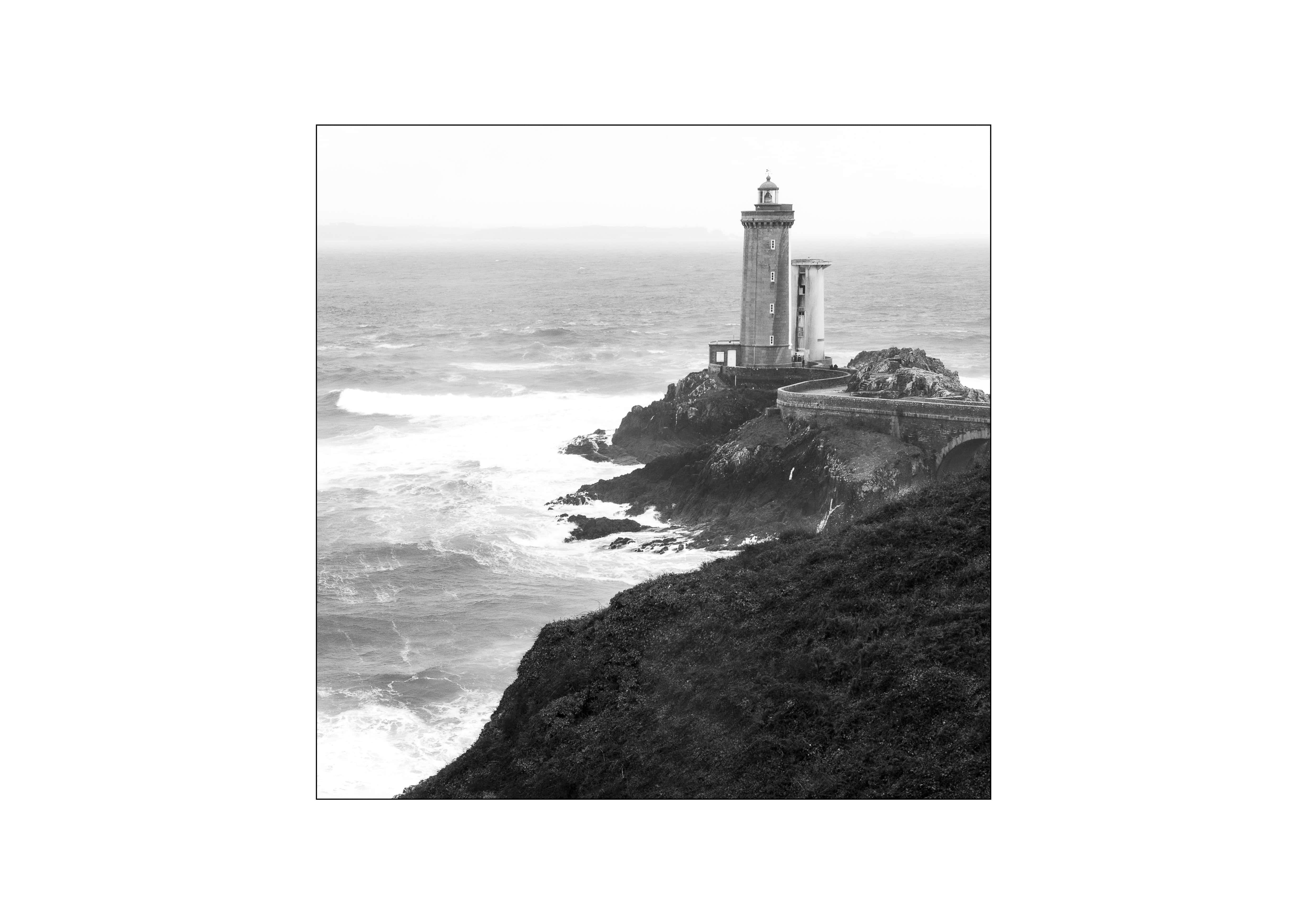
Photograph the October coast with me
Every autumn I run a small storm-season workshop in Finistère — four photographers, the wildest light of the year, and the water at its most alive. If this is the coast you want to learn to read, come and read it with me.
See the workshops
Leave a Reply